The Maritime Archaeology Trust (MAT) with support from Historic England is undertaking a project aiming to better understand the issues of equality of opportunity for women in maritime archaeology and to develop initiatives to actively improve the situation. The MAT, located in Southampton, England, is choosing to focus initially on women and organisations within the United Kingdom, with hopes to provide frameworks of analysis and investigation to the wider field as the project continues. Between 2023 and 2024, MAT conducted a project known as ‘Women and Protected Wrecks: Examining Engagement’. Protected Wrecks in UK waters are remains of ships and boats within the territorial limits of the UK that meet certain standards set by the government. These sites are discovered, licensed, and protected often by local stakeholders with the help of the governing body.
The data gathered from this project showcased unexpected outcomes, revealing persistent disparities across the field. While women make up 56% of professional maritime archaeologists, they are widely underrepresented in academia (35%), membership-based organizations (37%), leadership roles (30%), conference speakers (20%), and authorship of maritime archaeology publications (20%). Furthermore, women only represent 30% of UK divers (Figure 1). These results were sobering to the reality of female representation in the maritime archaeology field in the UK and highlighted a clear discrepancy between opportunity and workforce.
At Jacobs, we’re challenging today to reinvent tomorrow. Our Cultural Resources team supports complex infrastructure, energy, coastal resilience, and environmental remediation projects across the U.S., providing high‑quality archaeological and heritage management services. We are seeking a Marine Archaeologist to join our growing team in a modified full-time capacity, supporting projects nationwide. The successful candidate may be based anywhere in the U.S. and will collaborate with multidisciplinary teams across regions.
You’ll play a key role in delivering marine and coastal cultural resource services for both public and private sector clients. Working closely with terrestrial archaeologists, environmental planners, engineers, and regulatory specialists, you’ll support projects from planning and permitting through fieldwork, analysis, and reporting.
Responsibilities:
Lead and support marine and maritime archaeological investigations, including submerged cultural resources surveys and assessments.
Design and implement survey strategies using remote sensing data (e.g., magnetometer, side‑scan sonar, sub‑bottom profiler).
Analyze marine geophysical datasets and prepare technical memoranda and cultural resource reports.
Provide regulatory support under Section 106 of the National Historic Preservation Act, the National Environmental Policy Act (NEPA), and applicable state and tribal regulations.
Coordinate with federal and state agencies, Tribal Nations, Indigenous communities, and consulting partners.
Support permitting efforts for offshore, nearshore, riverine, and Great Lakes projects.
Participate in fieldwork as needed, including vessel‑based survey, limited diving (if qualified), and monitoring.
Contribute to proposal preparation, scopes of work, schedules, and budgets.
Mentor junior staff and contribute to team knowledge‑sharing and best practices.
Here’s what you’ll need
Bachelor’s degree or higher in Archaeology, Marine Archaeology, Anthropology, or a closely related field.
Minimum of 5 years of relevant professional experience in marine or maritime archaeology.
Experience with marine geophysical data acquisition and/or interpretation.
Working knowledge of federal and state cultural resource regulations.
Strong technical writing, organizational, and communication skills.
Ability to travel periodically for fieldwork and meetings.
Ideally, you’ll also have:
A Master’s degree in Archaeology, Marine Archaeology, Anthropology, or a closely related field.
Experience working in coastal, offshore, and/or Great Lakes environments.
Familiarity with renewable energy, transportation, or coastal resilience projects.
Experience collaborating with Tribal Nations and Indigenous communities.
Professional dive certification and experience (scientific diving preferred), though not required.
Experience managing tasks, budgets, and schedules on multidisciplinary projects.
#LI-AW1
Our health and welfare benefits are designed to invest in you, and in the things you care about. Your health. Your well-being. Your security. Your future. Employees have access to medical, dental, vision, and basic life insurance, a 401(k) plan, and the ability to purchase company stock at a discount. Eligible employees may also enroll in a deferred compensation plan or the Executive Deferral Plan. Jacobs has an unlimited U.S. Personalized Paid Time Off (PPTO) policy for full-time salaried/exempt employees, seven paid holidays, and caregiver leave. And certain roles may be eligible for additional rewards, including merit increases, performance discretionary bonus, and stock.
The base salary range for this position is $75,300.00 to $117,600.00. Within the range, individual pay is determined by work location and additional factors, including job-related skills, experience, and relevant education or training.
All qualified applicants will receive consideration for employment without regard to race, color, religion, sex, sexual orientation, gender identity, national origin, disability or protected veteran status. Job posted on February 03, 2026. This position will be open for at least 3 days.
Harbor Archaeology: Between Local Communities and Connective Seas
The Maritime Archaeology Interest Group of the AIA (MAIG) invites abstracts for a session focusing on the ways that ports, harbors and their attendant spaces shaped – and were shaped – by the diverse communities that inhabited them. Harbors, ranging from monumental urban ports to informal anchorages, exist at the intersection of the global and the local. These spaces serve as nodes in interregional exchange and loci for imperially or nationally sponsored building programs. At the same time, they are also lived spaces utilized by communities for economic opportunity, resource procurement, and community building. This panel puts the local at the forefront, centering community experience from the Shores of the Great Lakes to the wine-dark waters of the Mediterranean Sea.
We recognize harbors as flexible, multifaceted, and evolving spaces, encompassing large-scale seaports, as well as natural inlets, lakeshores, rivers, and beachfronts. Whatever their form, harbors were centers for diverse activities with distinct archaeological footprints. Far from static, they frequently underwent processes of decay, abandonment, reuse, and resurgence.
We seek papers that examinethe reciprocal relationship between these changing spaces and the people that inhabited them. As liminal spaces of exchange and mobility, harbors shape cultural identities, religious expression, economic strategies, and political actions. Harborscapes are equally transformed by communities who navigated, ascribed meaning to, and negotiated their place within them. In conversation with the Annual Meeting’s theme of ‘Care and Mutual Aid,’ we especially welcome contributions addressing how communities were constructed and sustained in dynamic maritime landscapes. Hosted in Boston, a historic port city shaped by centuries of exchange, migration, labor, and resistance, this conversation is particularly apt. We aim to highlight how harbors function not only as nodes of connectivity, but as lived environments that actively structure daily life.
Please Note: We invite paper proposals for a session at the 2027 AIA/SCS Annual Meeting in Boston, January 7 – 10, 2027. Abstract submissions will close March 18, 2026. The session organizers will review abstracts and send decisions to authors in April. The session will only run if given final approval by the AIA. This is planned as a hybrid panel.
We are excited to announce the 2026 AIMA Conference will be held in Geelong! We look forward to welcoming you to Victoria from 18-20 September 2026. This conference will be hybrid in format with in-person and online registration options.
For the Love of It: Celebrating Avocational Contributions to Maritime Archaeology
Across the world many individuals share a deep passion for maritime archaeology and underwater cultural heritage. We are captivated by shipwrecks, by maritime histories, and the sites and artefacts that now rest beneath the water’s surface. While a small number pursue maritime archaeology as a profession, it is those who engage in this study “for the love of it” who form the true backbone of maritime archaeology.
We welcome you to Victoria where passionate members of the public have long been at the forefront of maritime archaeological fieldwork, monitoring, searching, research, education, advocacy and museum management. From groups such as the Maritime Archaeology Association of Victoria and Amazon 1863 Project Inc, to many maritime museums assisted by volunteers, and to dedicated individuals such as Jack Loney, Terry Arnott and Don Love. Passionate Victorians have played an invaluable role in establishing legislation and the political will to advance maritime archaeology across the State, as have similar groups and individuals throughout Australasia.
However, keeping these community-driven efforts alive is not without immense challenges. Funding, insurance, online platforms, health and safety regulations, and even difficulties in engaging new audiences, all threaten to sink volunteers and volunteer organisations. What keeps us afloat is a shared passion, a common purpose, and the strength of community support.
This conference celebrates the avocational groups and individuals who have contributed and are contributing to the research, protection and preservation of maritime and underwater cultural heritage – divers monitoring sites, passionate avocational groups, researchers and surveyors who devote endless hours, museum volunteers who bring stories to life. Without them, we literally would not be here (and not only because AIMA and this conference is run by volunteers too)!
In particular, we invite volunteers, and all others with a passion for maritime archaeology and heritage, to share their projects, achievements and challenges. We also encourage deeper conversations about the future: How we can better support avocational efforts? What is the evolving role of volunteers in maritime archaeology? What new opportunities can be created to support their continued and meaningful involvement?
Join us in Geelong to celebrate and strengthen the diverse community of people united by their love for maritime and underwater cultural heritage.
MPF Federal is seeking a passionate Archivist/Historian to join our Maryland team.
Principal Objective: Responsible for the preservation, identification, cataloging, documentation, and overall management of NOAA’s heritage asset collections, including items with historical and natural significance, cultural importance, educational importance, and artistic appeal.
COMPENSATION: $70k – $73k annually. (Depends on a variety of factors including education and experience)
Performs duties which include technical and specialized work in connection with the management of NOAA’s museum collections and historical exhibits. The successful candidate will manage NOAA’s collections of heritage assets, responsible for performing a full range of complex museum specialist, registrar and collections storage facility work.
Regular, full-time. on-site work at NOAA Headquarters in Silver Spring, MD is required (no hybrid option).
Occasional travel to other NOAA facilities around the U.S. may be required.
Responsibilities include:
● Conducts collections management casework, which includes maintaining object records in NOAA’s collection management system and ensuring they are accurate and up to date, performing annual inventories, and overseeing loan documentation.
● Assesses object conditions and arrange suitable treatment for objects requiring conservation.
● Monitors NOAA’s museum and storage environments regularly to ensure proper collections preservation parameters are being met and works to correct deficiencies.
● Engages in historical research to identify and establish accurate age, provenance and history of objects, and determining historical significance of museum artifacts for improved interpretation in exhibits and publications.
● Documents findings in federal collections information systems and other appropriate files.
● Answers correspondence from museum partners and the public related to NOAA’s historic collections.
Requirements
● Successful candidates must demonstrate specialized museum experience
● Master’s Degree required – Library Science or Related
● Experience with computerized collections data management systems, methods, and procedures.
● Experience with museum collections management practices, including acquisition, evaluation, registration, cataloging, preserving, packing, storage, and retrieval, and shipping of heritage assets.
● Ability to lift collection items up to 40 pounds and to use a variety of material handling equipment (MHE) to safely move heritage assets.
● Demonstrated knowledge of American history. Additional knowledge of scientific or maritime history preferred.
Benefits
MPF Federal is an equal opportunity employer. All qualified applicants will receive consideration for employment without regard to race, color, religion, sex, sexual orientation, gender identity, national origin, veteran status or on the basis of disability. We offer a competitive compensation package including a competitive salary, medical benefits, PTO, holiday pay and more.
MPF Federal is seeking a passionate Archivist/Historian to join our Maryland team.
Principal Objective: Responsible for the preservation, identification, cataloging, documentation, and overall management of NOAA’s heritage asset collections, including items with historical and natural significance, cultural importance, educational importance, and artistic appeal.
COMPENSATION: $70k – $73k annually. (Depends on a variety of factors including education and experience)
Performs duties which include technical and specialized work in connection with the management of NOAA’s museum collections and historical exhibits. The successful candidate will manage NOAA’s collections of heritage assets, responsible for performing a full range of complex museum specialist, registrar and collections storage facility work.
Regular, full-time. on-site work at NOAA Headquarters in Silver Spring, MD is required (no hybrid option).
Occasional travel to other NOAA facilities around the U.S. may be required.
Responsibilities include:
● Conducts collections management casework, which includes maintaining object records in NOAA’s collection management system and ensuring they are accurate and up to date, performing annual inventories, and overseeing loan documentation.
● Assesses object conditions and arrange suitable treatment for objects requiring conservation.
● Monitors NOAA’s museum and storage environments regularly to ensure proper collections preservation parameters are being met and works to correct deficiencies.
● Engages in historical research to identify and establish accurate age, provenance and history of objects, and determining historical significance of museum artifacts for improved interpretation in exhibits and publications.
● Documents findings in federal collections information systems and other appropriate files.
● Answers correspondence from museum partners and the public related to NOAA’s historic collections.
Requirements
● Successful candidates must demonstrate specialized museum experience
● Master’s Degree required – Library Science or Related
● Experience with computerized collections data management systems, methods, and procedures.
● Experience with museum collections management practices, including acquisition, evaluation, registration, cataloging, preserving, packing, storage, and retrieval, and shipping of heritage assets.
● Ability to lift collection items up to 40 pounds and to use a variety of material handling equipment (MHE) to safely move heritage assets.
● Demonstrated knowledge of American history. Additional knowledge of scientific or maritime history preferred.
Benefits
MPF Federal is an equal opportunity employer. All qualified applicants will receive consideration for employment without regard to race, color, religion, sex, sexual orientation, gender identity, national origin, veteran status or on the basis of disability. We offer a competitive compensation package including a competitive salary, medical benefits, PTO, holiday pay and more.
Our Tour Leaders: Chris Sabick, James L. Nelson and Bruce Venter
Registration Fee: $195
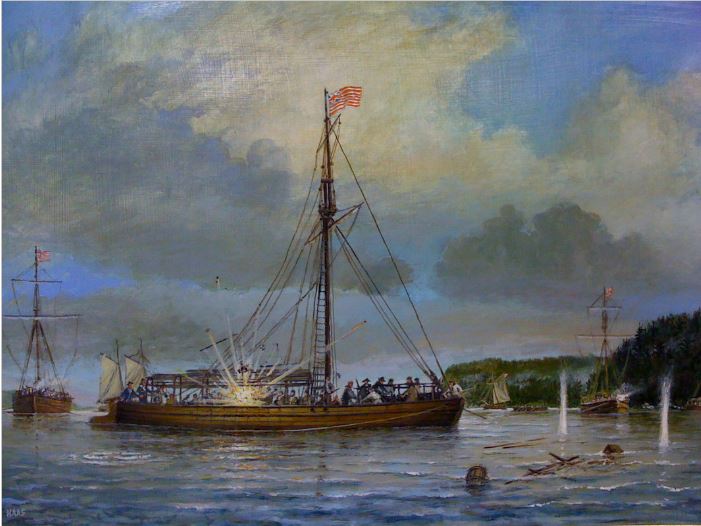
America’s History will partner this October with the Whitehall Community Leaders and Washington County Tourism to offer a one-day Revolutionary War tour commemorating the 250th anniversary of Benedict Arnold’s epic naval battle on Lake Champlain. Led by Chris Sabick, Jim Nelson and Bruce Venter, the tour departs from a designated parking lot (TBD) in Whitehall, New York at 8 a.m. and includes an interpretation of the battle of Valcour Island from nearby lake sites, a visit to the Lake Champlain Maritime Museum and a boat ride thru the Narrows of Lake Champlain, including Button Bay where Arnold scuttled the remainder of his defeated fleet.
This tour will demonstrate Benedict Arnold’s skill as a naval commander and heroism for the Patriot cause as we visit land and “on the water” sites. We’ll see Valcour Island from the New York shore, visit the Lake Champlain Maritime Museum which has special exhibits related to Valcour Island, board the reconstructed gunboat, Philadelphia II and take a boat ride thru the Lake Champlain Narrows where Arnold fought a delaying action with the British. Chris will update us on the recent archaeological excavations that have been conducted at Arnold’s Bay, the site where Arnold burned the five remaining vessels from the Valcour fleet.. He’ll explain the continuing plan for archaeological work on the gunboat Spitfire, which is still located in the deep dark waters of Lake Champlain where it was sunk during the retreat from the battle. The affable Jim Nelson will add his expertise as a naval historian and professional mariner himself. Bruce Venter will provide his always caustic criticism of Arnold’s performance during the Revolutionary War.
We will return to Whitehall to attend the Friday evening reception planned in conjunction with the Saturday seminar where our tour guides will be featured speakers.
Other important information: This tour is limited to 42 participants due to the capacity of the tour boat, so please register early. A minimum of 30 participants is needed to run the tour. This is a land and water tour. The bus will leave a designated parking area in Whitehall at 8:00 a.m. and return by 5:00 p.m. You will be notified prior to the tour date where to park on October 2.
What’s included: Motor coach transportation, a boat ride thru Lake Champlain’s Narrows, lunch buffet at the Basin Harbor Resort on Lake Champlain, snack and beverage breaks, all admissions and gratuities, a map and materials package and the services of three tour leaders selected for their knowledge and expertise. Plus, Lynne’s world-famous brownies will be onboard.
Our Tour Leaders: Chris Sabick was appointed executive director of the LCMM in 2023. A nautical archaeologist by trade, Sabick has spent his entire professional career working on the lake and surrounding waterways with the Lake Champlain Maritime Museum. James L. Nelson is an awarding author of 25 books of nautical fiction and non-fiction, including Benedict Arnold’s Navy, George Washington’s Secret Navy and George Washington’s Great Gamble: And the Sea Battle that Won the American Revolution. He is also a former professional squared-rig sailor. Dr. Bruce Venter, president of America’s History, LLC is an experienced tour leader of the Colonial and Revolutionary War period. He is the author of The Battle of Hubbardton: The Rear-Guard Action that Saved America.
Wood is currently seeking a Senior Archaeologist/Marine Archaeology Lead, for a full-time position in southwestern Ontario.
Ideally this role will be based in either our Burlington, Richmond Hill, Cambridge or London, ON offices.
The successful candidate will be part of a dynamic team of experienced consulting archaeologists. This position will play a key role in growing and developing the Cultural Resource Group in Ontario, with a particular emphasis on Marine Archaeology. The position involves mostly office and some field-based responsibilities.
Key Responsibilities:
Assisting with all aspects of archaeological permitting and assessment requirements aligned with the Ontario Heritage Act and MHSTCI’s standards;
Research, prepare, and submit proposals and reports for a variety of archaeological projects;
Project management, including client and stakeholder communications, organizing and monitoring support staff;
Preparation and review of reports to meet MHSTCI’s standards;
Senior technical oversight/review;
Work with and mentor archaeological staff within the department;
Business development activities, including developing in-house marine archaeological capabilities;
Interacting with clients, government personnel and Indigenous Nations;
Analysis of artifacts and interpretation of data;
Skills / Qualifications
Professional License in good standing from the MHSTCI;
Ability to secure a Marine Archaeology Permit from MHSTCI;
Master’s Degree in Archaeology, Anthropology or related field;
10+ years’ experience in consulting archaeology in Ontario (Stage 1 – 4 AA);
Must have detailed working knowledge of Ontario archaeology with an applied understanding of current Standards and Guidelines for Consultant Archaeologists issued by the MHSTCI and associated Technical Bulletins;
Capable of delivering quality work in a deadline-driven environment with minimal supervision;
Able to follow and implement both technical and safety training and instructions;
Strong written and verbal communication skills;
Ability to obtain Provincial and Federal Security Clearance;
Must have a satisfactory driving record in accordance with the Company’s driving policy (MVR);
A valid Canadian driver’s license;
Preferred Qualifications:
Expert Knowledge of Material Culture such as Historical, lithic and/ or Indigenous Artifacts in Ontario
Membership with the Canadian Association of Heritage Professionals (CAHP)
Company Overview
Wood is a global leader in engineering and consultancy across energy and the built environment, helping to unlock solutions to some of the world’s most critical challenges. We provide consulting, projects and operations solutions in more than 60 countries, employing around 40,000 people. http://www.woodplc.comDiversity Statement (EEO)
We are an equal opportunity employer that recognises the value of a diverse workforce. All suitably qualified applicants will receive consideration for employment on the basis of objective criteria and without regard to the following (which is a non-exhaustive list): race, colour, age, religion, gender, national origin, disability, sexual orientation, gender identity, protected veteran status, or other characteristics in accordance with the relevant governing laws.Employment Type: OTHER
The Maritime Historian at Canadian Adventure Charters Ltd. (CAC) plays a pivotal role in the success of the Corporation. Reporting directly to the Board of Directors, the Maritime Historian is responsible for conducting historical shipwreck research, preparing comprehensive reports, and providing expert guidance to CAC, investors, and regulators. This position ensures historical data management aligns with CAC’s mission, values, goals, operating principles, and strategic initiatives
About Canadian Adventure Charters Inc (CAC)
Canadian Adventure Charters (CAC) operates in the ultra-luxury research expedition and deep-sea submersible charter industry. Our elite clientele, consisting of high-net-worth individuals, are offered exclusive and unforgettable voyages to explore the world’s most remote coastlines, breathtaking underwater sites, and historic shipwrecks—all in unparalleled comfort and style.
Our fleet consists of cutting-edge Research Explorer Ice-classed Vessels and Submersibles, registered under DNV & ABS classifications. These state-of-the-art vessels are equipped with the latest technology, ensuring both safety and luxury for all expeditions. With substantial untapped potential in the luxury yachting and submersible sector, CAC is strategically positioned to capitalize on emerging opportunities within the global market.
Key Responsibilities
• Conduct historical research and draft detailed reports on shipwrecks, including government funding programs and projects aligned with CAC’s strategic initiatives. • Identify, document, and analyze historic shipwrecks, including warships, merchant vessels, and passenger ships lost in Canadian waters, particularly in Newfoundland & Labrador, The Northwest Passage, Baffin Islands, and the Arctic regions. • Build and maintain relationships with investors, regulators, stakeholders, and global maritime museums. • Oversee and manage historical maritime art, cultural artifacts, treasures, and high-value shipwreck cargo portfolios valued between $1B-$10B. • Provide expertise on significant historical maritime events, such as World War I & II naval battlefields, pirate treasures, and legendary maritime explorations. • Maintain extensive knowledge of John Cabot’s voyages, Viking explorations, and European maritime history related to North America. • Collaborate with film and entertainment industry partners, including The History Channel, on historical documentary productions related to shipwrecks and treasure discoveries (e.g., Oak Island).
• Utilize underwater sonar mapping and archaeological survey methodologies to analyze shipwreck sites. • Ensure adherence to corporate policies, regulatory requirements, and confidentiality protocols. • Support expedition planning, mapping, and data analysis to enhance CAC’s operational efficiency.
Minimum Qualifications & Experience
• Ph.D. in Maritime History, Archaeology, or Shipwreck Recovery. • 15+ years of experience working with maritime museums globally, including in Canada, Greenland, Iceland, Norway, Scotland, Ireland, England, the UK, the EU, Spain, Africa, and the USA. • Proven leadership experience with at least 10 years in a senior director role overseeing economic and business development in maritime exploration, luxury yachting, and treasure recovery. • Expertise in historical artifact identification, shipwreck cargo valuation, and preservation of maritime cultural heritage. • Extensive experience managing investor relations and networking with Fortune 500 companies. • Strong written and verbal communication skills with the ability to convey complex historical information to diverse audiences. • Demonstrated ability to manage projects under tight deadlines while balancing multiple priorities.
Preferred Skills & Expertise
• Experience with deep-sea exploration, submarine operations, and offshore adventure tourism. • Strong understanding of climate change, global warming, and marine research impacts on historical sites. • Ability to design, direct, and supervise archaeological projects, including Phase I, II, and III underwater excavation processes. • Knowledge of historical navigation routes, storm-related shipwrecks, and naval warfare.
Application Process
To apply, candidates must submit a detailed cover letter explaining their background and interest in joining Canadian Adventure Charters, along with a comprehensive resume/CV. Applications should be sent to info@cacsd.ca.
For more information about Canadian Adventure Charters, please visit our website at www.cacsd.ca.
This is an extraordinary opportunity for a renowned maritime historian to contribute to groundbreaking research and high-profile exploration missions while engaging with some of the world’s most prestigious investors and institutions
Canadian Adventure Charters (CAC) is a leader in ultra–luxury research expeditions and deep–sea submersible charters. We cater to an elite clientele of ultra–high–net–worth individuals, offering exclusive voyages to explore remote coastlines, breathtaking underwater sites, and historic shipwrecks. Each expedition is designed to blend adventure, discovery, and luxury seamlessly.
Our fleet consists of cutting–edge Research Explorer Ice–Class Vessels and Submersibles, classified under DNV & ABS standards, ensuring the highest levels of safety, innovation, and comfort.
Reporting Structure
Reports directly to the Board of Directors.
Key Responsibilities
• Lead Marine Archaeological Research & Exploration – Conduct in–depth research, develop historical databases, and oversee underwater surveys, site evaluations, and preservation efforts. • Manage Marine Archaeology Projects – Supervise field operations, ensure regulatory compliance, and collaborate with researchers, maritime historians, and government entities. • Expedition Education & Guest Engagement – Deliver engaging onboard presentations and briefings, providing an educational experience for our high–profile guests. • Investor & Stakeholder Relations – Build and maintain relationships with investors, Fortune 500 companies, industry leaders, and government agencies to support funding and strategic partnerships. • Regulatory & Environmental Compliance – Ensure all archaeological research and expeditions adhere to national and international regulatory frameworks. • Business Development & Branding – Contribute to branding, marketing, film production partnerships, and proposal development to enhance CAC’s industry presence.
Required Qualifications
• Master’s Degree in Maritime Archaeology, Cultural Resource Management, Archaeology, Anthropology, or a related field. • 10+ years of experience in marine archaeology or cultural resource management. • Extensive expertise in shipwreck recovery, artifact analysis, mapping, and photographic documentation. • Strong leadership and communication skills, with experience collaborating with Indigenous communities, government bodies, and international research organizations. • Valid STCW95 Transport Canada marine certifications and a current seafarer’s medical. • Ability to operate in extreme marine environments with extensive travel commitments.
Compensation & Application Process
Compensation: Highly competitive, based on education, experience, certifications, and published works (articles, reports, books, etc.).
How to Apply: Submit your resume/CV, a detailed cover letter, a technical writing sample, and three professional references to: Email: Info@cacsd.ca
For more information about Canadian Adventure Charters, visit our website: www.cacsd.ca
The Mariners’ Museum and Park is interested in hiring a Registrar to join our Team. The Mariners’ Museum and Park has been recognized as a Hampton Roads Top Workplace for each of the past six years. That recognition reflects, in part, the high level of commitment that our Team feels toward serving our local, national, and global communities, as our Mission calls us to do. We are a passionate bunch striving for excellence in all that we do. We also learn a lot from one another about the Museum and its world-class Collection, about the Park and its “Living Collection” (the forest, lake, and wildlife in our Park), and about the communities we serve. The Registrar will be a full partner on our Team.
The Registrar reports directly to The Director of Collections Management and is responsible for the stewardship and safekeeping of the Museum’s records pertaining to the Collection. This position is focused on maintaining records, managing loans, and designing sustainable policies and procedures to facilitate those functions. The Registrar also supports access to the Collection, both internally and externally, through various means.
The Mariners’ Museum and Park offers an excellent benefits package to include paid sick leave and vacation, generous health insurance contributions, and a 403b retirement match. This is a full-time, salary-exempt position with a salary range of $50,000 – $70,000.
Candidates must include a Cover Letter in order to be considered.
No phone calls, please – only applicants being considered for interviews will be contacted.
Duties:
Responsible for carrying out the registration of the Museum’s Collection, acquisitions, deaccessions, disposals, and loans; and responsible for maintaining the records pertaining to the Collection.
Responsible for document preparation and maintenance of permanent records of the Collection, which are both stored on paper and digitally.Advocate for all aspects of Museum’s Collections Management Policy.
Provide access to information about the Museum’s Collection and holdings.
Coordinate object moves and serve as project lead for Collection inventories and moves. This includes collecting data and preparing schedules, budgets, and plans associated with Collection inventories and moves.
Develop policies and procedures to ensure efficient and accurate workflows that align with best practices and institutional priorities.
Requirements
Knowledge, Skills, Abilities:
Knowledge of professional practices in museum collections management and registration.
Attention to detail with strong oral and written communication skills.
Ability to collaborate with both internal and external stakeholders, including donors, lenders, and researchers.
Possession of excellent organizational skills and the ability to quickly adapt and prioritize in a fast-paced, rapidly changing environment.
Ability to manage a wide variety of projects from design to completion while demonstrating sound judgment.
Proficiency in all Microsoft products and Windows-based applications.
Education and Experience:
Bachelor’s and Master’s degrees in art history, fine arts, history, anthropology, archeology, museum studies or a related field preferred, or an equivalent combination of education, training, and relevant experience.
Approximately 5-7 years of experience preferred and may include:
Registration or collections management at a collecting institution.
Object handling at a collecting institution.
Working with complex information structures and online publication of object information from a software platform (Collection Management Systems, Digital Asset Management Systems, etc.).
Conditions of Employment:
Must be able to pass a background check prior to employment.
Must be able to work various hours, including nights and weekends.
Medium grants (between £10,000-£70,000) are considered twice per year, with the following deadlines.
April 1st
October 1st
HFF strongly recommends applying early for these grants to allow time for feedback on your application. Decisions on your grants will usually be made within 3 months of the application deadlines.
Grant Criteria
Grants are evaluated using the following criteria, with each project expected to engage with at least one category. Applicants are encouraged to identify these areas in their applications.
Will the project generate high-quality regional research?
Does the project aim to develop regional skills and capacity including conservation, dive training, marine geophysics, database development?
Does the project aim to develop regional partners and partnerships/enhance the regional research environment?
Will the project encourage interconnected activities that achieve multiple benefits?
Will the project raise the profile and increase the visibility and value of marine cultural heritage?
Please note that our grant programme is increasingly competitive. The Foundation has funds to support a limited number of applications in each funding cycle, only awarded to those applications deemed by the trustees to be of the highest standard.
For more information please contact our Grants Manager, Ceri Ashley.
Application Guidance
Clicking on the link below will open a new window for our grant management system.
You will be required to create a new account to use this system. This account will be used for applications and reporting for all HFF funded projects.
Please carefully read the text under each application question for guidance.
We suggest that you write longer text in a word document, in case of submission errors.
When attaching files to applications, please rename them to match your submission.
If you do not receive an automatic email, or having problems with our grant management system, please contact Dani Newman.
For more information please contact our Grants Manager, Ceri Ashley.
The Maryland Historical Trust (MHT), an agency of the Maryland Department of Planning, is seeking to hire a State Underwater Archaeologist. MHT is the state agency dedicated to preserving and interpreting the legacy of Maryland’s past. Through research, conservation and education, MHT assists the people of Maryland in understanding their historical and cultural heritage. Part of the Maryland Department of Planning, MHT serves as Maryland’s State Historic Preservation Office (SHPO) pursuant to the National Historic Preservation Act of 1966.
The main purpose of this position is to assist the State Underwater Archaeologist to implement a statewide program to enhance Maryland’s historic sites and traditions by identifying, evaluating, protecting and studying maritime and underwater archaeological resources located within Maryland State waters; disseminating research and educational information about State submerged cultural resources to both professional and public communities, and executing authorized and mandated federal and State activities and programs as they relate to maritime and underwater archaeological resources. The position directly supports the Agency mission to enhance Maryland’s historic sites and traditions and preserve Maryland’s heritage resources.
Enforces all state and federally mandated legislation, regulations, standards and guidelines promulgated for the identification, assessment, protection and study of submerged cultural resources in Maryland, deals especially with compliance review.Reviews projects submitted for historic preservation review in compliance with state and federal historic preservation laws.Assists the State Underwater Archaeologist by managing grants, reviewing archaeology permit applications for completeness and providing data for underwater archaeology program portions of required state and federal reports and planning documents.Assists the State Underwater Archaeologist by maintaining inventory records and coordinating repair and maintenance of boats, vehicles, diving and other field equipment.Assists the State Underwater Archaeologist with maintenance of volunteer, diving, field and other records.Assists the State Underwater Archaeologist with planning, design and conduct of underwater archaeological field work, including the statewide survey and inventory program; maintains all documentation pertaining to field work including notes, photographs, drawings and final reports.Maintains diving and field abilities through skills maintenance activities and continuing education as necessary.
Provides and/or assists with educational activities and undertakes public relations efforts relating to submerged cultural resources in order to provide the historic and cultural traditions of the State.Provides appropriate information, training and technical assistance pertaining to underwater archaeological issues and the relevant legislation, regulations, standards and guidelines to government organizations, non-profits and the public.Coordinates social media, website updates, and develops and/or supports development of online resources related to the Maryland Maritime Archaeology Program and submerged cultural resources.Serves as additional staff and/or alternate representing MHT, MD SHPO, and/or the Maryland Maritime Archaeology Program at meetings, trainings, events, and/or exercises, etc., related to management and protection of submerged and intertidal cultural resources.
Education: Graduation from an accredited high school or possession of a high school equivalency certificate.
Experience: Five years of administrative staff or professional work.
Notes:
1. Candidates may substitute 30 credit hours from an accredited college or university for each year up to four years of the required experience.
2. Candidates may substitute the possession of a Bachelor’s degree from an accredited college or university and one year of experience in administrative staff or professional work for the required experience.
3. Candidates may substitute the possession of a Master’s degree from an accredited college or university for the required experience.
4. Candidates may substitute U.S. Armed Forces military service experience as a commissioned officer involving staff work related to the administration of rules, regulations, policy, procedures and processes, or overseeing or coordinating unit operations or functioning as a staff assistant to a higher ranking commissioned officer on a year-for- year basis for the required experience.
Education and / or experience is in underwater archaeology with a specialization in marine geoarchaeology.Experience working with federal (USA) and state (Maryland) historic preservation laws and regulations including Section 106 of the National Historic Preservation Act.Scientific/archaeological diving experience and/or diving certifications.
Begin a fulfilling career with the State of Indiana by joining one of the largest employers in the state, offering a range of opportunities across 60+ agencies. At the state, you’ll find competitive compensation, a robust benefits package and a commitment to work-life balance. Most importantly, you’ll have the chance to make a real and measurable impact on the lives of Hoosiers across Indiana.
About the Indiana State Museum and Historic Sites (ISMHS): The Indiana State Museum and Historic Sites (ISMHS) is a statewide museum system with 12 locations, including a central museum based in Indianapolis. Our mission is to ignite wonder, inspire curiosity, reveal stories and create connections. Our values are Integrity, Stewardship, Interconnectivity, and Transparency.
Role Overview:
The Conservation Lab Manager is responsible for the preventive care and physical preservation of the ISMHS collection, working in partnership with the Director of Collections to maintain optimal storage and exhibition environments. You will oversee the daily operations of the conservation lab and serve as an active member of a collaborative team dedicated to comprehensive collections care. Core responsibilities include preventive conservation, exhibit preparation, storage management, inventory, cataloging, and documentation for both cultural and natural history materials.
The position requires adaptability and a willingness to develop skills in conservation techniques, mount making, and data entry to support effective stewardship of the collection. Strong communication skills and the ability to work cooperatively with colleagues and cross‑functional project teams are essential.
Salary:
The salary for this position traditionally starts at $56,650 but may be commensurate with education or work experience.
Coordinate and manage preservation of ISMHS collections.
Oversee daily operations of the conservation lab, including workplans, resource use and safety standards.
Supervise the Conservation Coordinator and Conservation Specialist, as well as interns and volunteers. This includes setting goals, directing workflow, developing strategies and maintaining communication between conservation staff and ISMHS colleagues.
Provide input on ways the conservation lab can further the strategic goals of making the ISMHS collection more visible and accessible and enhance ISMHS’ reputation in areas of expertise.
Facilitate the use of ISMHS collections objects for research and exhibition, including loans, by preparing artifacts for examination and handling.
Work on object preparation for exhibitions, including preventive conservation measures, mounting and installation.
Oversee the installation of collections objects in ISMHS core galleries and temporary exhibitions
Serve on internal teams for exhibitions and other institutional projects.
Assist natural science curators with data updates in the collections management system.
Carry out annual inventories for natural history specimens and cultural history artifacts across the museum system.
Assess the condition of artifacts in the collection and prepare condition reports to determine conservation needs.
Carry out preventive and basic conservation treatments as appropriate.
Monitor and assist with cleaning and maintenance of 92 County Icon sculptures; identify issues that require in-house or contract conservation and work with team to identify appropriate treatment plans.
Clean objects in storage and on exhibit; assist with cleaning at sites and routine cleaning at museum.
Prepare collections records and assist with photography sessions.
Facilitate contracts related to conservation and collections care.
Identify supplies needed for conservation lab operations and overall collections care and provide budget information to Director of Collections.
Communicate with staff, other museums and the general public to promote the preservation of artifacts and to promote the ethical responsibilities of museums.
Assist with grant proposals and other development activities as needed.
The job description is not intended to be a comprehensive listing of all activities, duties, or responsibilities required of the employee. Other duties, responsibilities, and activities may be changed or assigned at any time.
This position is exempt from overtime compensation for additional work hours that may be required to complete essential functions or other assigned work. Exempt employees may work more than 75 hours in a pay period without additional compensation and must report a minimum of 75 hours per pay period of work hours and/or paid leave taken to receive their base biweekly salary.
What You’ll Need for Success:
Credentials:
Bachelor’s degree and advanced training in artifact handling.
At least three years of experience at the management level, preferably with supervisory experience.
Experience in the preparation of historic artifacts for storage and exhibition in a museum setting.
Additional qualifications:
Demonstrated skill working with delicate objects.
Strong interest in developing new skill sets.
Thorough knowledge of proper procedures related to conservation, including documentation and record keeping.
Knowledge of state and federal laws pertaining to collections conservation.
Knowledge of the rules, regulations and procedures related to collections conservation.
Working knowledge of computer databases and word processing systems; experience with collections management systems preferred.
Working knowledge of and ability to effectively implement supervisory and managerial principles and practices in the supervision of volunteers.
Ability to communicate orally and in writing with other staff, superiors and the general public
Valid Indiana driver’s license.
Able to perform essential functions with or without reasonable accommodation.
Supervisory Responsibilities/Direct Reports:
This role may be utilized in a supervisory capacity based on agency needs.
Benefits of Employment with the State of Indiana:
The State of Indiana offers a comprehensive benefits package for full-time employees that includes:
Three (3) medical plan options (including RX coverage) as well as vision and dental plans
Wellness Rewards Program: Complete wellness activities to earn gift card rewards
Health savings account, which includes bi-weekly state contribution
Deferred compensation 457(b) account (similar to 401(k) plan) with employer match
Two (2) fully-funded pension plan options
A robust, comprehensive program of leave policies covering a variety of employee needs, including but not limited to:
150 hours of paid New Parent Leave and up to eight weeks of paid Childbirth Recovery Leave for eligible mothers
Up to 15 hours of paid community service leave
Combined 180 hours of paid vacation, personal, and sick leave time off
12 paid holidays, 14 in election years
Education Reimbursement Program
Group life insurance
Referral Bonus program
Employee assistance program that allows for covered behavioral health visits
Qualified employer for the Public Service Loan Forgiveness Program
Free Parking for most positions
Free LinkedIn Learning access
Equal Employment Opportunity:
The State of Indiana is an Equal Opportunity Employer and is committed to recruiting, selecting, developing, and promoting employees based on individual ability and job performance. Reasonable accommodations may be available to enable individuals with disabilities to complete the application and interview process as well as perform the essential functions of a role. If you require reasonable accommodations to complete this application, you can request assistance by contacting the Indiana State Personnel Department at jobs@spd.IN.gov.
WCOA is seeking proposals from qualified individuals or firms for a limited-duration contract as WCOA’s new Tribal Science & Data Coordinator (TSDC). This contractor will support science and data-related activities of Tribal governments that are members of WCOA and the West Coast Ocean Tribal Caucus. The contractor will strengthen Tribal engagement in regional ocean science and data initiatives as part of WCOA’s efforts to ensure Tribal priorities are effectively integrated into projects, tools, and deliverables. Facilitating early and ongoing communication with Tribal partners is a core function of this role. This role supports WCOA’s broader goals related to ocean health, efficient decision-making, and strengthened Tribal engagement through improved use and coordination of ocean science and data.
Please see the full Request for Proposals for more information about this contracted position and the application instructions.
Proposals are due by 11:59 PM (Pacific Time) on Friday, March 6th, 2026, to jobs@westcoastoceanalliance.org. Any proposals submitted after this time will not be included in the initial review phase for this contract hiring.
If you have any questions or would like more information about this RFP, please contact staff@westcoastoceanalliance.org.
Support for developing education at Master’s, Doctoral and Post-Doctoral levels is offered by the Foundation to students and scholars from the region (Lebanon, Cyprus, Syria and Egypt). This support is offered in two ways:
Targeted Scholarships: Requiring students from the region to conduct research in maritime archaeology at either a specific institution or on a specific topic.
Open Scholarships: Enabling students from the region to undertake research in maritime archaeology at a university of their choice.
General Requirements:
Must demonstrate a genuine interest in maritime archaeology of the eastern Mediterranean region and would be expected to develop the subject in their home country upon their return.
Required to write their Master’s dissertation or PhD thesis on a subject relevant to the HFF regional remit
Possess a good 2:1 honours degree (or equivalent) at an appropriate level. For PhD this must be in either archaeology or a related discipline (preferably maritime archaeology).
You must be a national of Cyprus, Lebanon, Egypt or Syria.
Full Terms and Conditions for HFF Scholarships can be found here.
The deadline for all scholarship applications to HFF is March 16th, annually.
It is the applicant’s responsibility to ensure they meet the programme requirements and apply by the programme deadline.
Shortlisted candidates will be contacted by the end of April to arrange an interview. Final decisions on scholarships will be made by Mid-May.
For general enquiries and to discuss potential topics, please contract Dr. Dani Newman
Application Guidance
Clicking on the link below will open a new window for our grant management system.
You will be required to create a new account to use this system. This account will be used for applications and reporting for all HFF funded projects.
Please carefully read the text under each application question for guidance.
We suggest that you write longer text in a Word document, in case of submission errors.
When attaching files to applications, please rename them to match your submission.
If you do not receive an automatic email or have problems with our grant management system, please contact Dani Newman.
Experience three cities and two countries during this travelling conference that will take place at the Maritime Centre Forum Marinum, Turku, House of Sciences and Letters in Helsinki, Finland and at the Estonian Maritime Museum in Tallinn, Estonia, on 11th–13th June 2026. It is organised by the Finnish Maritime History Association, the Finnish Maritime Archaeological Society, the Estonian Maritime Museum and the Maritime Centre Forum Marinum. As with the 12 earlier biannual Maritime History Days conferences, we aim to bring together scholars and students working on maritime history and related fields such as maritime archaeology, ethnology and maritime folklore.
The conference programme is now published and includes three keynote lectures, held by Dr. Kaori Nagai (Senior Lecturer in Victorian Literature, University of Kent), Dr. Mirja Arnshav (Research Coordinator, The National Maritime Museum, Stockholm), and Dr. Matteo Barbano (Marie Skłodowska-Curie Fellow, University of Genoa). Please find the progamme and an introduction of our keynote speakers below.
The overall theme of the conference is travelling by sea, with no temporal or geographical limits and with a multispecies approach. Travelling by sea is probably as old as human society. Furthermore, non-human animals have always travelled across the seas voluntarily or otherwise. Sea travel has countless purposes: to explore the world, to make trade connections, to migrate, or to cruise. Sometimes the voyagers have been forced to escape from disasters or violent regimes. The Gulf of Finland, for instance, has connected Estonians and Finns for centuries, from the seprakauppa/sõbrakaubandus trade to our own time when the sea area between Tallinn and Helsinki is one of the busiest ferry routes in the world. The increased mobility by people and goods has also raised questions on the sustainability of sea travel. More on the conference themes and topics can be found in our CFP below.
We aim to promote interdisciplinary encounters and discussions, with the goal of bringing together scholars worldwide. The conference is intended for anyone working with topics somehow relating to the sea and maritime travel – previous experience with maritime history, maritime archaeology, or maritime ethnology specifically is not necessary. The bi-annual, peer-reviewed journal Nautica Fennica will be offering participants the possibility to submit their papers in the journal. The publishing decisions will be made by the Nautica Fennica editorial board. More on Nautica Fennica here: https://smhy.fi/en/activities/nautica-fennica.
Registration is open until 2.5.2026. Please note that the bookings are non-refundable.
The conference will be held in-person, and we cannot guarantee hybrid participation. Conference language is English apart from 11th June, when the new researchers’ meeting will be held in Finnish and Swedish.
For any inquiries, please contact conference secretary Emilia Syväsalmi (talous[at]smhy.fi)
 Underwater Archaeology and Maritime History jobs
You must be logged in to post a comment.